
A day dedicated to botulinum toxins, fillers, facial anatomy, and medical simulation
After a first day dedicated to understanding the skin, the SKIN LAB.
The Bootcamp Summer 2026 continued its program with a day entirely dedicated to injection techniques in aesthetic medicine with THE ANATOMY LAB.
On July 30, participants were guided by Dr. Amal Abid around a central objective: to deepen their theoretical knowledge while developing their ability to reason before, during, and after an injectable procedure.
The day combined facial anatomy, risk areas, complication management, botulinum toxin, hyaluronic acid, facial mapping by ultrasound, case studies, quizzes, and practice on simulators.
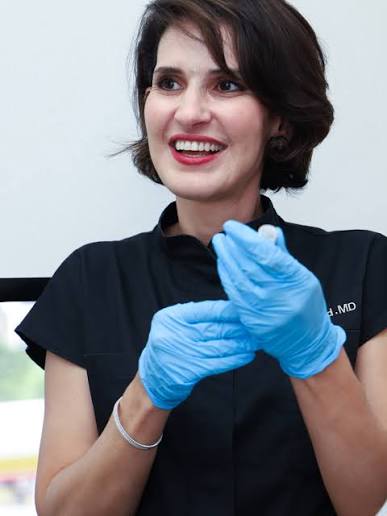
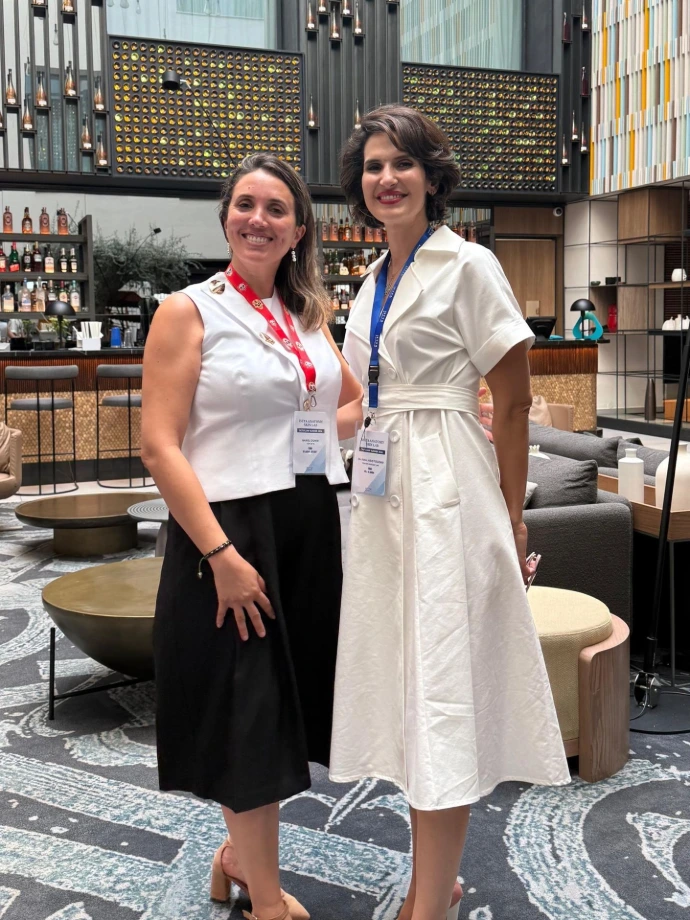
Aesthetic injection starts with anatomy
A successful injection does not rely solely on knowledge of a product or technique.
It requires, above all, a precise understanding of the anatomy of the treated area.
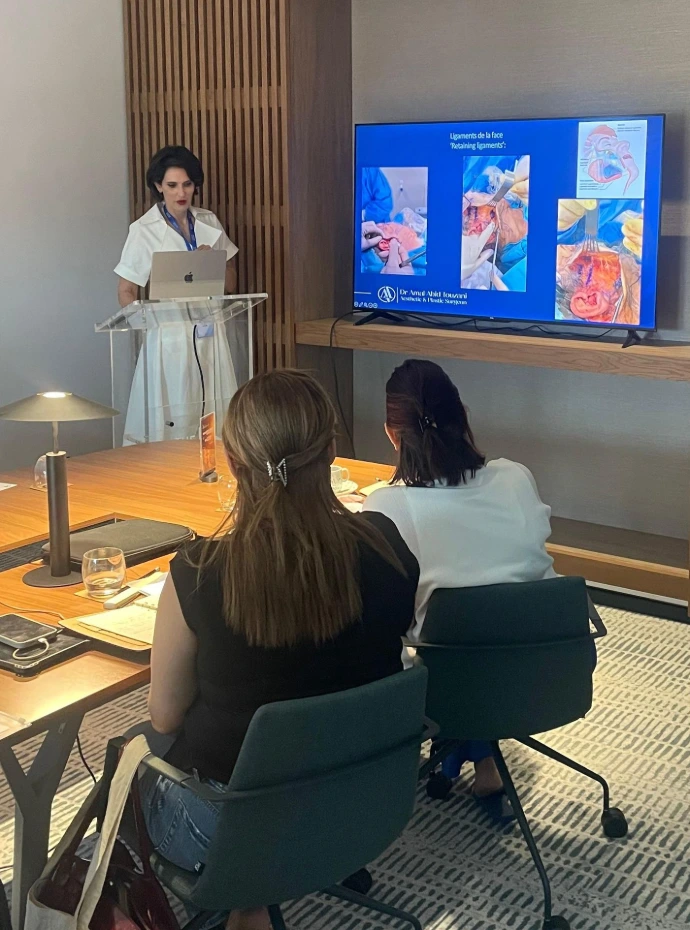
The training thus placed applied cadaveric facial anatomy at the heart of the learning.
Understanding the different anatomical planes, vascular structures, and risk areas based on cadaveric dissection videos allows the practitioner to develop a more thoughtful approach to injection.
The goal is therefore not simply to know where to inject, but to understand the structures present in the treated area and the implications of each clinical decision.
Botulinum toxin and hyaluronic acid: two approaches, two reasonings
The day also addressed two major categories of injectable treatments widely used in aesthetic medicine:
Botulinum toxin and Hyaluronic acid fillers.
Bien que ces deux approches appartiennent au domaine des injections esthétiques, leurs mécanismes, leurs indications et leur raisonnement clinique diffèrent.
The training allowed participants to explore these differences through theoretical knowledge, clinical cases, and situations inspired by real practice.
This approach helps the practitioner go beyond simple memorization of protocols to develop a true decision-making ability.
Identify the at-risk areas
Safety is an inseparable element of any injection training.
A thorough knowledge of at-risk anatomical areas allows the practitioner to integrate safety into each of their decisions.
The day particularly addressed the principles related to identifying sensitive structures as well as the prevention and management of complications..
This dimension is particularly important in training aimed at professionals wishing to enhance their clinical practice.
Learning through simulation
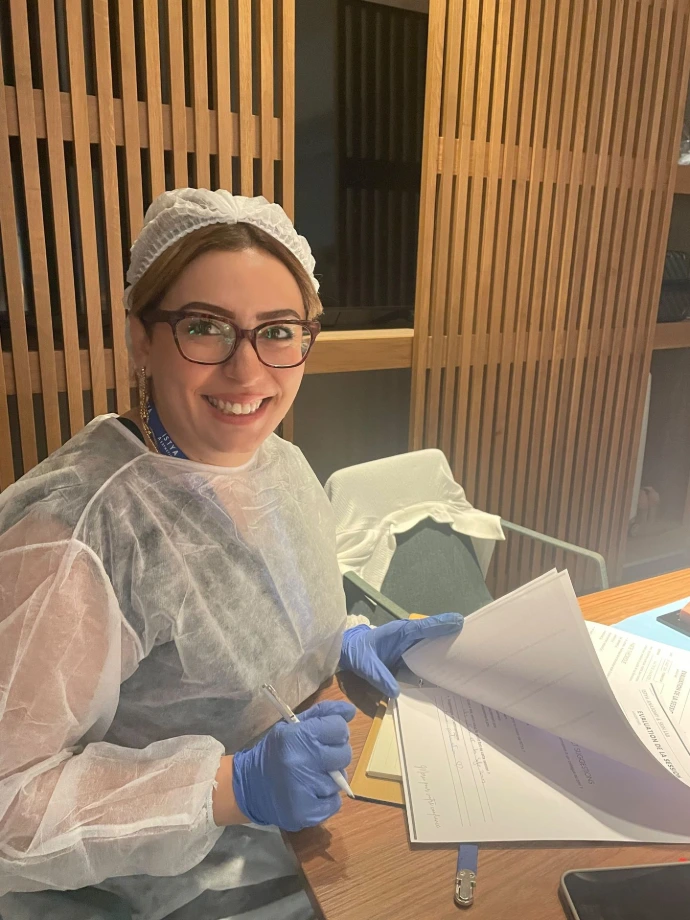
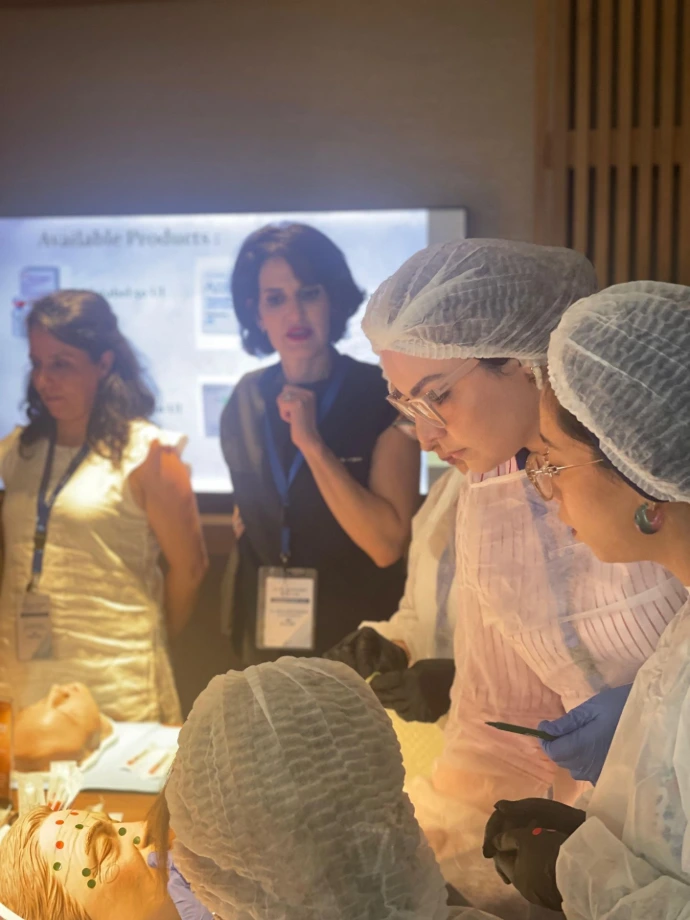
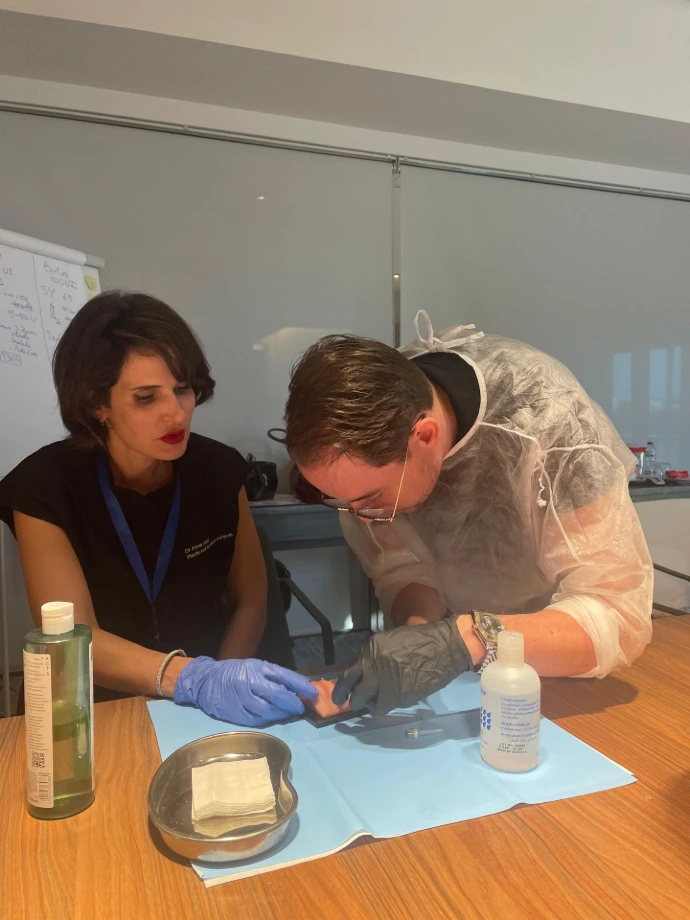
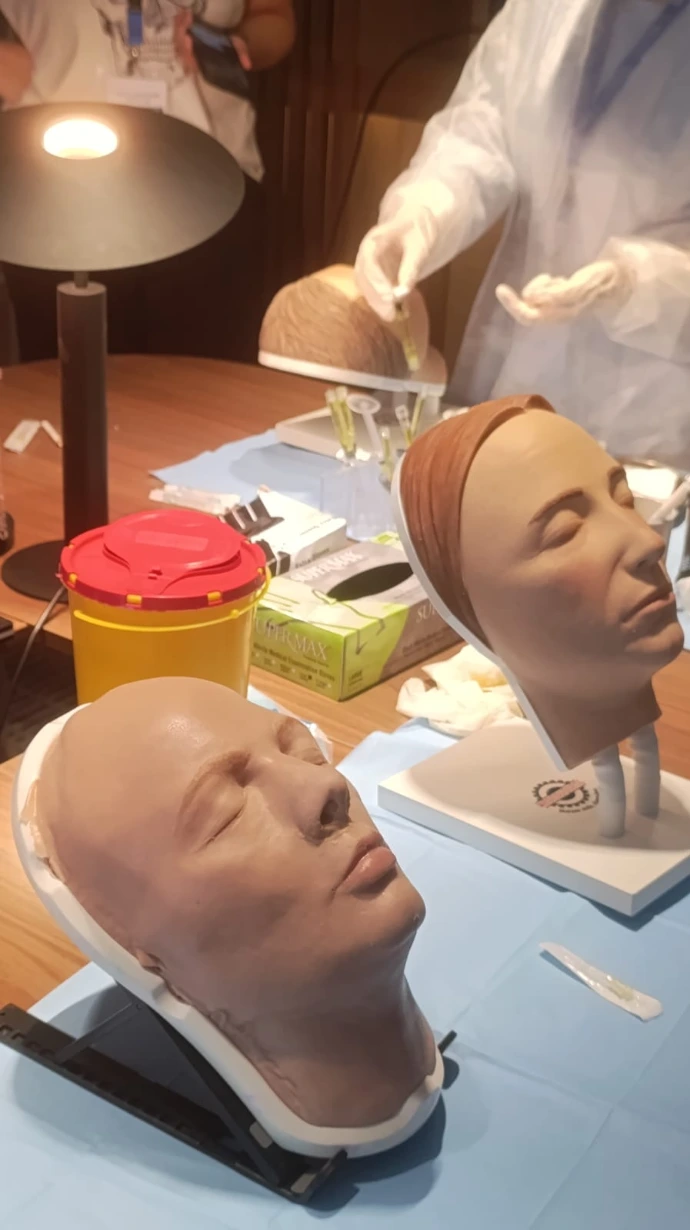
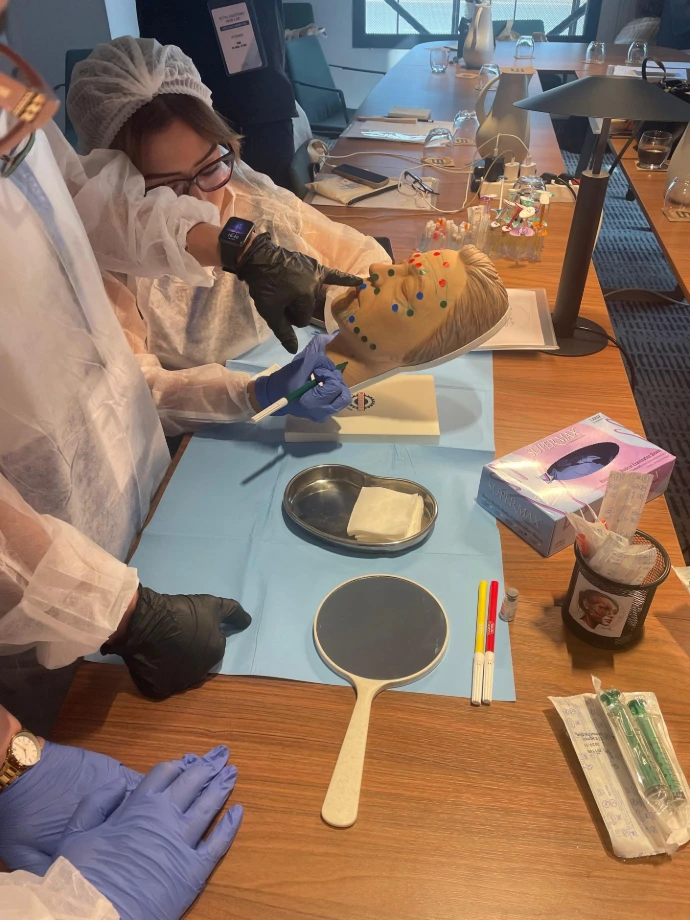
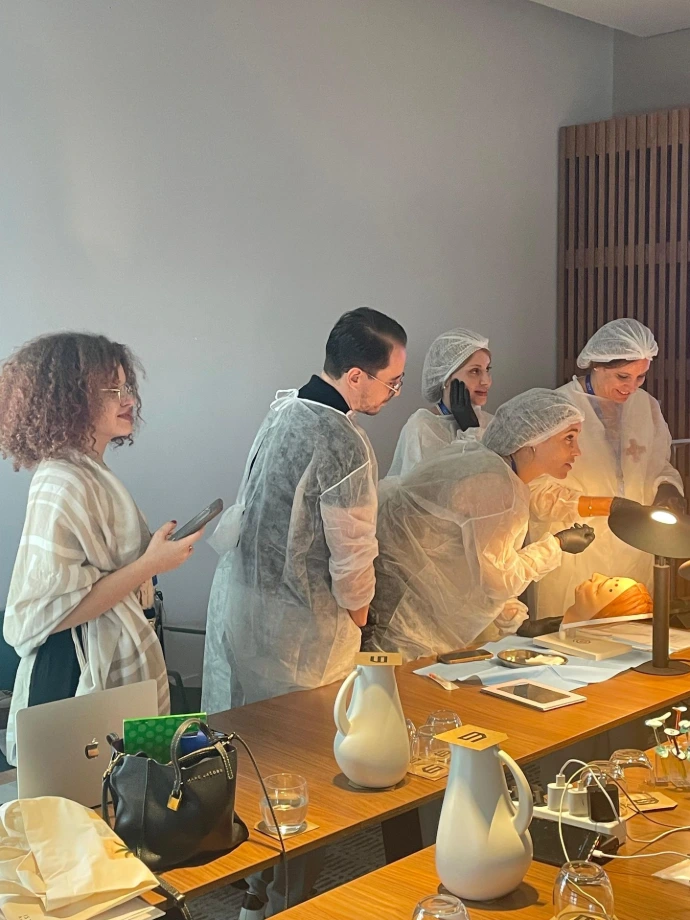
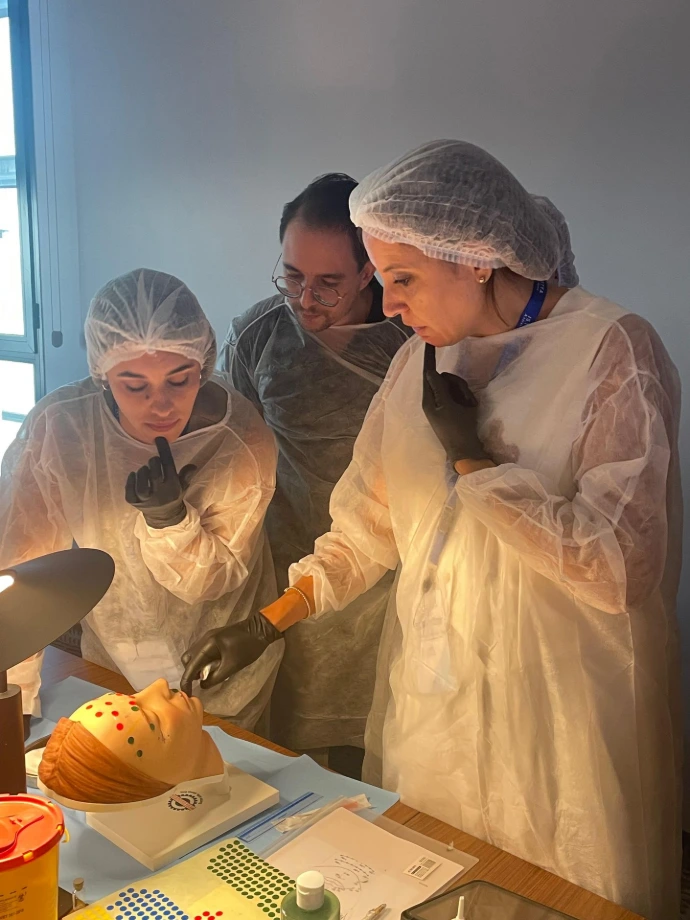
After the theoretical knowledge, participants were able to move on to practice on hyper-realistic medical simulators.
Simulation creates a controlled learning environment that allows for the connection between:
Anatomy → Reasoning → Technique → Safety
It also offers the opportunity to work on precision and confidence before moving on to real clinical situations.
For ISTYA Aesthetic, this progression is an essential component of pedagogy: theory must be able to be transformed into practical skill.
Quizzes and case studies: testing clinical reasoning
The day was not limited to the transmission of knowledge.
Participants were also faced with quizzes and case studies, allowing them to mobilize the concepts covered during the training.
Clinical cases are a particularly interesting educational tool for developing medical reasoning.
In the face of a given situation, the practitioner must gradually learn to:
- analyze the situation,
- identify the relevant elements,
- take anatomy into account,
- determine the treatment objectives,
- anticipate risks,
- build an appropriate strategy.
This approach brings learning closer to the reality of the consultation.
Insights from real practice
Clinical experience plays an important role in the learning of injections for ISTYA candidates.
Participants were thus able to benefit from insights and cases inspired by real situations, allowing for a perspective on theoretical knowledge.
These exchanges particularly allow for addressing situations that cannot always be fully anticipated by a standard protocol.
Because in practice, each patient has their own anatomy, expectations, and characteristics.
A day to move from "how" to "why"
One of the major objectives of this second day was to develop a more thoughtful approach to injection.
Beyond the technical gesture, the practitioner must be able to understand:
Why this technique?
Why this product?
Why this area?
What risks should be anticipated?
How to adapt their approach to the patient?
It is this reasoning that transforms a technical skill into a true clinical skill.
Simulation as a step before clinical practice
The second day thus constituted an essential transition to the next two days of the Bootcamp.
After working on the skin, anatomy, and injectable techniques in a controlled educational environment, participants would be able to confront their knowledge with the reality of clinical practice.
A voluntary progression:
Know → Understand → Simulate → Practice
About ISTYA Aesthetic
ISTYA Aesthetic designs training programs for healthcare professionals wishing to deepen their mastery of the aesthetic medicine, facial anatomy, injections, and clinical safety, combining scientific knowledge, simulation, and supervised practice.
Meet our trainer
A professional dedicated to our success

Dr Amal Abid
Plastic Surgeon
A renowned specialist in mastering facial volumes and anatomical safety.
She personally supervises each technical gesture to ensure a smooth transition between theoretical science and real clinical practice.